5 Allergens to Watch Out for This Winter

Many people believe that as the spring and fall seasons wrap, so do their allergies. But the truth is that they are mistaken. While the onslaught of colder weather and freezing temperatures brings an end to seasonal pollen allergies, it doesn't mean that your environment is free of allergens.


Especially in New York City, winter means that more people are staying indoors to avoid the cold. What many people may not know is that they can be exposed to indoor allergens that are lurking within their home. And, with the holidays around the corner, there are a few common triggers such as Christmas trees or fireplaces that can contribute to those unwanted allergens.


Add to this the fact that winter allergies and the common cold have many similar symptoms and you have the makings of one unpleasant season if you're an allergy sufferer. But don't worry! Here are a few tips on what allergens people with allergies should be mindful of this winter.


Dust & Dust mites

What: Microscopic, allergy symptom-inducing dust mites lurk in bedding, mattresses, carpets, and upholstered furniture.


Tip: Use dust-proof covers on mattresses, box springs, and pillows to avoid exposure and regularly wash bed linens in hot water to kill dust mites. Vacuum all carpeted areas at least twice a week and install HEPA filters to improve air quality and consider using a dehumidifier to keep humidity in the home below 50 percent, which helps to control dust mites.


Mold

What: Mold grows in damp environments like basements and bathrooms and can be present both indoors and outdoors. Airborne molds can cause asthma symptoms and allergic rhinitis.


Tip: To combat mold the EPA recommends fixing plumbing problems or leaks, increasing ventilation in damp areas, and scrubbing mold off surfaces using water and detergent, and drying completely.


Mold can hide in many places in the home, including under carpets, on ceiling tiles, in showers, and behind wallpaper, dry wall, or paneling. When mold grows outdoors, it grows in dark, wooded areas, so thoroughly inspect any firewood you plan to bring into your home. And, as much as you may want to jump in that leaf pile, remember that leaf piles are a breeding ground for mold.


Animal dander

What: All warm-blooded pets, such as cats, dogs, birds, and rodents, have dead skin cells, also known as animal dander. Colder weather usually means that both people and animals are indoors more often. Increased exposure to animal dander can lead to an increase in allergy symptoms. Allergies to pets are caused when a person has a reaction to proteins found in the animal's saliva, skin cells or urine. The reaction usually occurs when people are exposed to these proteins.


Tip: Pets should be kept out of bedrooms and other highly-used areas in the home to reduce exposure, and they should be bathed once a week.


Christmas trees

What: While Christmas trees themselves may not be the source of allergic reactions, they can harbor mold spores and microscopic allergens that cause allergies.


Tip: People bringing a Christmas tree into their home this winter should try to hose off the tree and let it dry before bringing it into the house to get rid of as many mold spores as possible. Another idea would be to use an artificial or reusable tree to eliminate the chance of bringing mold spores from live trees into the home. The one thing you need to be cautious of when using an artificial tree is dust depending on how and where you store it year over year. Be sure to give it a through cleaning before it's brought into the home.


Smoke and Pollutants

What: As mentioned, firewood brought into the home can contain mold spores. Wood burned in a fireplace can release irritating smoke and other airborne pollutants into the home environment, potentially causing allergic rhinitis or asthma symptoms.


Tip: Be sure that when bringing in any firewood into the home that it's been cleaned and checked for mold. In addition, when starting any fire, be sure that the chimney damper is open so that no unwanted smoke comes into the home.


The best way for a person to handle winter allergies is also the simplest: understand what triggers allergy symptoms and control them with avoidance.


from Healthy Living Blog on The Huffington Post http://www.huffingtonpost.com/julie-kuriakose-md/5-allergens-to-watch-out-_b_6214234.html?utm_hp_ref=healthy-living&ir=Healthy+Living


Do We Live in a Time of Narcissism

No, we don't live in a time of Greek Mythology but we use words of past historical and mystical figures and gather images of centuries past. "Narcissus fell in love with his own image in a pool of water and finally changed into a flower." This flower bears his name "Narcissus" to this day. Many stories have been written about Narcissus throughout the ages; he was a tragic figure.


It is said that healthy narcissism exists in many individuals and is an essential part of normal development. It is either a search for self-worth or self-esteem, sometimes to counter an inadequate self-perception or overcoming an emptiness within. We have to learn to understand this boundless need to self-expressing as we see today. Technology quickens the "me-myself-I" theme. Many tasks once considered uniquely human are now driven by personal technology. These tools also bring change to all that we hold dear or important. There is a shift in perception, fewer people work in jobs thought important at one time, education, medicine, manufacturing, law-professions, servicing homes, these and more are constantly changing. Education above all guides people into the next stage of ingenuity and technology. This is optimistic and positive.


With all the speculations and visions of the future we are living in the "now" and need to learn to adjust. Technology is part of our everyday life and we are learning to deal with these intense challenges. Hands-on labor will never be obsolete. Learning, building a productive life, tilling the fields, feeding the billions and enjoying a precious, healthy life is still a gift. Maybe innovation and entrepreneurs have found substitutes for human labor yet all these new inventions and ideas also compliment life and bring new understanding.


Dr. Debbie Joffe Ellis, an Australian Psychologist, writer and presenter, now living in New York, is affiliated with major psychological and counseling associations, and a specialist in Rational Emotive Behavior Therapy (REBT) with a doctorate in alternative medicine, is saying:


Sadly, many people are taught to value themselves according to any talents or material goods they possess. The danger of identifying with what we have or do is that if we lose abilities, looks, wealth or possessions - there can be a tendency to feel lost, empty and worthless. When we work on accepting ourselves and our fallibility unconditionally - knowing that we have worth, simply because we exist, we can lead wholesome, happier and healthy lives. Each human has worth, whether he or she succeeds or fails at attaining their goals. It is beneficial, given that we are largely social animals, to make an effort to show kindness and compassion to others as well as to ourselves. Some cynics may say it is 'selfish' to do for others in order to make ourselves feel good. Self-interest, and showing interest in the well-being of others, is key to creating healthier communities, healthier societies and ultimately a healthier world.


That brings the age of narcissism to foreground. Our tools for communications are fine and helpful, yet they also provide an alienation process, a virtual life versus a real one. For example seeing art or great architecture, travel to far-away places in real time enriches our human understanding, brings a new dimension, and teaches us to respect or honor those who give or gave us these great gifts and made them possible. Yes, automations are part of our daily lives, yet we still enjoy looking into the eyes of a human being, hearing a real voice, sharing feelings and emotions. It is of endless value, machines don't offer that. We can choose to be part of this 'loving-my-tool' society, choose taking selfies every moment of our lives, always with us in the picture, masterpieces of self-importance, positively or negatively, joyfully or obnoxiously. Our choice! Yes, there are masterpieces by great painters of the past in self-portraits, like Goya, Rembrandt, van Gogh, Frida Kahlo, the selfies of their time, are great and precious gifts to us today and will be for centuries. We are fortunate to enjoy them and to live in a Nation of open minds and possibilities with our open systems.


The consequences of this brilliant new technology is positive and predictable... yet we must remember that it is not always well-intended. Warnings about cyber-attacks, personal and institutional, have become an often occurrence. No matter how well protected we think we are in our privacy. Genuine tension exists between our ability to know more or feel protected --but so do others and know more about us than we envisioned. Selfies are a mirror of ourselves! Sometimes these mirrors are broken and we cannot stop it.


We live in a time of abundance, have an endless choice of smartphone cameras for selfies... now even provided with selfie-sticks. People wandering through the great spaces we know from history or travels yet often are totally unaware nor paying attention to these great visions. These stick -- extensions are intrusive and show also the disrespect, not only to the people sharing the space but to the accomplishments of the past. It has nothing to do with technology but a way of feeling entitled. Narcissism is all around us! Of course the right to pose for selfies is each person's choice, unless posted otherwise. Today's travelers have the great joy of seeing art and architecture of the now and the past by taking photos or selfies, but should remember that there are others who have as much interest and the same right to see these treasured surroundings without being blocked or intruded upon their reverie.


from Healthy Living Blog on The Huffington Post http://www.huffingtonpost.com/christa-dowling/do-we-live-in-a-time-of-narcissism_b_6233110.html?utm_hp_ref=healthy-living&ir=Healthy+Living
The Hidden Factor in Failing to Reach your Goals

What would you say are the core skills of successful goal creation?


Here's a shortlist based on the most common answers I hear from clients or in my workshops and seminars:


  • Identifying what it is that you want


  • Taking action in the direction of its creation


  • Noticing the results you are getting


  • Adapting your actions based on your results


So if you were doing all that, why might you still not reach your goals on schedule?


Recently, a friend was sharing his disappointment at failing to reach a career goal by a deadline he'd set when it dawned on me that he might be missing the point. He seemed to think the problem was either with him (he hadn't tried hard enough) or possibly the universe (it was out to get him that week). What hadn't occurred to him is that you can have a great strategy, take inspired, effective action, have all the stars aligned in your favor, and still fail to reach your goals in the time frame you've created because of one hidden factor.


I call it "hidden" because before I heard my mentor George Pransky talk about it in a coaching session, I had never once given it a moment's thought. And since that time, I've never heard anyone else talk about it either.


The reason a lot of people fail to reach their goals in the time frame they've set is simply this:


Most of us aren't very good at predicting how long things are going to take.


In other words, if you want to lose 30 pounds in three months and 90 days later you've only lost 15 pounds, did you "fail" because you didn't try hard enough, because your metabolism was working against you, or because it turns out that in this instance, 90 days wasn't a long enough time frame to reach that goal given your strategy and what you were willing and able to do?


Or say you want to earn an extra $5,000 this month, but at the end of the month you haven't earned a penny. Was it poor planning? Poor execution? Or if you look at it objectively, are you on track to earn your extra $5,000 but it's going to take three months instead of the one you made up it should take?


Once George pointed out this "hidden factor" to me, I began to see it everywhere. Actors who give up on their dreams after not becoming stars in their first few months in Hollywood. Coaches who can't understand why they're not making six figure incomes in their first two years in the business. Employees who aren't getting promoted on their time schedule and entrepreneurs who think if the world hasn't beaten a path to their door the day they opened it they must be doing something wrong.


Are their times where your lack of results in a time frame indicate that a change of strategy, direction, or even career might be in order?


Of course there are.


But if the people whose opinion you respect (you do have coaches and advisers and mentors don't you?) agree that you're on the right track, the only thing that might be holding you back is an inability to predict how long something is going to take.


And there are three ways to address that:


1. Stop turning your goals into ultimatums:

Here's how I put it in one of my early books:


"Some people have learned to live by keeping themselves under the constant threat of poverty, abandonment, and self-hatred if they don't perform up to whatever standard they have decided upon. The problem with this motivational strategy is simple: If you keep putting a gun to your head, at some point you're going to want to pull the trigger."


Your goals are not the answer to your prayers and they're not the things that will set you free. They're just targets to aim for and organizing principles for your actions, generally based on a best guess at what you'll enjoy doing, being, or having at some point in the future. Turning them into more than that just makes it harder to find out if you're as bad at predicting future happiness as you are at predicting time frames.


2. Set a completely unrealistic time frame:

This is one of the bases for the Creating the Impossible challenges that I run from time to time -- when you set a time frame so short for a goal so big that "success" would be almost completely impossible, people curiously feel more able to just go for it and get involved in creation without worrying so much about whether or not "It's going to work."


That's why one of my favorite "unsticking" moves when I can't make progress on a goal is to double my target and halve the time I have available. Because I know I'm almost certainly not going to make it, I take the false deadline pressure off my mind and free myself up for more fun and creative thinking. And because I'm now just playing a game (double the target in half the time), I often come up with unique strategies that would never have occurred to me while trying to reach my more "realistic" target.


3. Navigate by joy:

One of the things I learned fairly early on in life is that the fastest way to future rewards is by following present joy. Even when that doesn't seem to be true, acting from a centered, joyful place on a daily basis inside ensures that worst case, you are really enjoying your days. And if you're really enjoying each day, how long it takes to get somewhere becomes a point of interest rather than a point of contention.


Have fun, learn heaps, and may all your success be fun!


with all my love,


2014-08-17-20130402michaelsig.gif


For more by Michael Neill, click here.


from Healthy Living Blog on The Huffington Post http://www.huffingtonpost.com/michael-neill/the-hidden-factor-in-fail_b_6210604.html?utm_hp_ref=healthy-living&ir=Healthy+Living

Type 2 Diabetics: Get Evaluated for Sleep Apnea

Research shows that seven in 10 people with Type 2 diabetes also have obstructive sleep apnea, a dangerous, potentially life-threatening condition that also increases your risk for obesity and heart disease. November is National Diabetes Month, and the National Healthy Sleep Awareness Project is advising everyone with Type 2 diabetes to be aware of their high risk for sleep apnea and talk to a doctor about any warning signs of this chronic disease.


A common misconception is that sleep apnea, a condition characterized by complete or partial airway obstruction during sleep, only affects older, overweight men. This widely-held assumption is wrong: Anyone can have sleep apnea, regardless of gender, age or body type -- even if you're not overweight.


The most common warning sign for sleep apnea is snoring, especially when it is combined with choking, gasping or silent breathing pauses during sleep. Other warning signs include daytime fatigue or sleepiness, high blood pressure and a body mass index (BMI) of 30 or higher. You should discuss these warning signs with your doctor, who may refer you to a board-certified sleep medicine physician for a complete sleep evaluation.


The sleep specialist may decide you need an objective sleep study, which will provide the data needed to make an accurate diagnosis. Once diagnosed, the most commonly recommended treatment for sleep apnea is continuous positive airway pressure (CPAP) therapy, which provides gently pressurized air through a mask, keeping your airway open and making it easier to breathe. For patients who are unable to tolerate CPAP, or who seek alternatives, knowledgeable sleep specialists can offer other treatments.


Long-term sleep apnea treatment can help diabetics manage their symptoms, including improving nighttime glucose levels and insulin sensitivity. A University of Chicago study showed that treating sleep apnea with CPAP therapy may even have as much of an effect in some patients as prescribed oral diabetes medications.


People with Type 2 diabetes can visit http://www.stopsnoringpledge.org to learn more about sleep apnea, find a local accredited sleep center, and pledge to "Stop the Snore" by talking to a doctor about their risk for sleep apnea.


from Healthy Living Blog on The Huffington Post http://www.huffingtonpost.com/timothy-morgenthaler-md/type-2-diabetics-get-eval_b_6214504.html?utm_hp_ref=healthy-living&ir=Healthy+Living

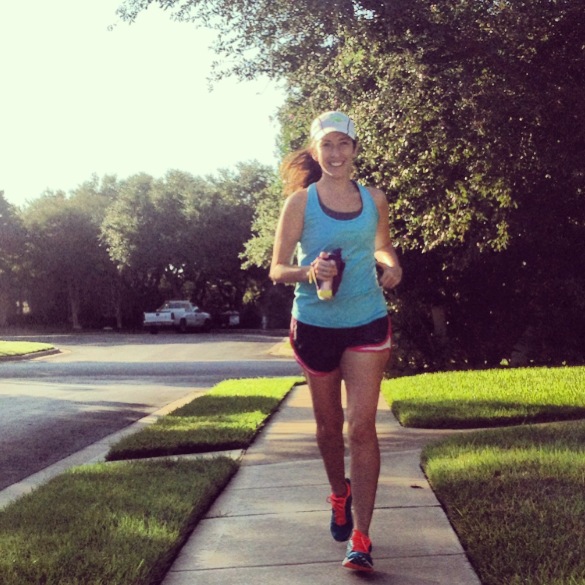
5 Lessons Running Has Taught Me

2014-11-26-photo96.JPG

"God made me for a purpose... And when I run, I feel His pleasure." --Eric Liddell


Here's what I truly love about running: Every single lesson it has taught me, can be applied to my life. Maybe it's the reason I continue lacing up my shoes, day after day. Even when running brings me tears. Because I know, right around the corner, is a lesson to be learned. I'll always be grateful for being a student of running.


Five Lessons Running Has Taught Me:


1. You have to get through the tough parts to get to the good.

Sometimes when I take off for a run, the first mile is so challenging I can't imagine how I can possibly make it to the end. Each step is a battle mentally and physically. It's the longest mile. For whatever reason (stubbornness? determination?), I keep trekking along. One day I had a ten mile run on the schedule and I didn't 'hit my stride' until the 6th mile. That means for about an hour of running, I was hurting, both mentally and physically. But once I got my wind, I was feeling great. If I had stopped when it didn't feel good I never would have made it to the good.


2. You can't look at the total distance.

I know it's there. Whether it's 4 miles, 13.1, 26.2 or 50-plus. If I think of how far I have to run, my mind begins to fill with doubt and negativity. I start hearing words like: Why are you doing this? You can't run that far! You're hurting, just stop. Instead, I have to focus on the mile I'm running. And I think of how far I've come. I have a 10-mile route that I run nearly every Saturday. I focus on getting three miles done. And instead of letting myself think about the seven more I have to do, I tell myself "Just two more miles, you can do two more miles." Once I'm at my five-mile mark, I don't let myself think "You are only halfway there," instead I think to myself "You just ran five miles! Now get three more miles done." Not once do I let myself think "You have to run 10 miles or you have seven more to go." If I start thinking that way, my mind will try to overpower my heart and tell me to give up. I cannot focus on how far I have to go. I have to break my run up into smaller miles and feel good about the miles that are behind me, not in front of me.


3. You have a strength in you that is more than muscle.

It's a strength that you find deep down in the core of what makes you you. I didn't have the words to describe it until I found a poster on Pinterest that described it perfectly: Beast Mode. If you think you don't have it, you are wrong. It's in you. You may have seen it when you went "Mama Bear" and had to stand up for your kids. Trust me, it's there. You don't always need to use it. But when you do, it's what will help you get through something that you thought was impossible.


4. You cannot compare, judge or worry how you match up to someone else.

Focus on yourself. I'm never the fastest, thinnest, or strongest runner out there. I have learned that someone out there is always judging you: for exercising too much, for exercising too little, for being a stay at home mom, for being a working mom. The list goes on and on. The only person I can worry about is me. When I run, whether it's on the treadmill at the gym, a route in my neighborhood, a race with thousands of people, I run for me. Everyone else is running their own race. Let them. And focus on you.


5. Running is a journey, and yet there is no finish line.

Or is it: life is a journey and there is no finish line. It all gets blurred. It was during my 50-mile ultra marathon journey that a good friend told me: happiness comes and goes. So does pain. And hurt. And joy. And sorrow. Instead of chasing those feelings or trying to run away from them, let them come and go. When I race, the finish line is never the end. A big part of the experience was the training along the way. And the experience of how my life changed after I finished the race. When you cross the finish line of any race, the journey hasn't been completed. Because you have more waiting for you -- good and bad. Running has taught me to embrace the journey. If running is a journey, I don't ever want to reach the destination. I don't want there to be a finish line because it's in the journey that I learn, live and love -- I grow. It's in the journey that I feel alive -- even when I feel pain.


My old running coach has a saying: "Run with Joy". Not only do I want to run with joy, I want to live with joy. I hope you do too.


Originally published on My Fit Family.


from Healthy Living Blog on The Huffington Post http://www.huffingtonpost.com/nicole-scott/5-lessons-running_b_6224958.html?utm_hp_ref=healthy-living&ir=Healthy+Living

Do You Know You Have Superpowers?

I met someone in a bookstore a couple of weeks ago that totally change my view on a lot of things. I saw my imagination come to life in the most intriguing way ever, at the very least moment I expected it. For a while now, I have been wondering and imagining what it would be like to bring a particular character and personality I had created in my head to life. To meet someone with similar values, passion, traits and attributes that connect with mine so deeply. Even though in my line of work as a speaker, this should happen from time to time or occasionally, I have never made a connection the way I did with this person that I met a couple of weeks ago. Astonished by this interaction, it took me a little while to recollect that we are all inventors, we are all capable of creating our future through our visions and dreams. We are all capable of materializing ideas and relationships that changes everything. This little ounce of faith had to be the reason I met this person the way that I did.


It was not planned neither had I met this person before but the moment I unknowingly shared a story from a book I am working on about my autobiography, her eyes soaked up with tears, validating that I was on the right path because life had replicated the same events I had experienced also in her story. What a wonderful feeling it is to know that the life we all live is not just ours alone but for others equally. What a wonderful feeling it is to know that the gift, talent, ideas or life story we possess can change that of someone incredibly. That it provide others a sense of hope, purpose and direction to guide them into what life has destined them to be. Immediately I understood everything this person was currently going through, I could easily relate to her struggles of fitting in. I understood the challenges of trying to live someone else's dream and because we do not want to hurt their feelings we have to settle for a definition that does not describe who we really are internally.


I also understood what it meant to hide one's true nature, one's real audience and try to blend in with a category of people who do not see what we see. And the more I was able to interpret this person's story, buckets and buckets of tears kept gushing down her face because everything I shared made perfect sense literally. She then added to the moment by letting know how she never cries for anything. Which also tells me for years she had successfully masked her pain not to show any sign of weakness but until we met was she unable to hide it any longer because we shared a similar and relatable story. This is one of the moments that makes the journey and sacrifices towards who we believe we are truly worth it. Being able to see how much impact we have on the lives of others. Knowing that our talents, ideas and skills, experiences and history has not only been designed to support us but also meant to support the world that has been created for others personally or professionally.


In an instant I became a superhero to this incredibly smart, charming and beautiful lady. A few minutes earlier that day in the bookstore, we had never met. We had no knowledge of one another, we barely know the other existed and she was actually visiting from another country. She was in-transit through my point of residence to another country when she decided before leaving she would spend a couple of weeks. What she was yet to realize was that her decision to spend a little bit of time before she was on her way was part of the plan the universe had designed to help her get the answers that she needed to make some incredible life changing choices. We all offer something of incredible value that can change the lives people incredibly. We can learn through our gifts, talents and skills how to become a superhero that uses their superpowers to heal anyone miraculously. God bless.


from Healthy Living Blog on The Huffington Post http://www.huffingtonpost.com/olayiwola-a-alara/do-you-know-you-have-superpowers_b_6239708.html?utm_hp_ref=healthy-living&ir=Healthy+Living

The Radical Choice of Militant Kindness

The first lesson every young man learns upon entering the prison system is that aggression is king and violence is law. The traits that are valued in the real world -- honesty, generosity, friendliness -- are viewed as weaknesses in prison. Weaknesses that are pounced upon and exploited. Survival in this world depends on at least the perception of brutality and if you're not particularly brutal, you had better be a damn good actor.


So that's what I've been doing for the last 22 years. Acting. Acting tough, acting hard, acting cold. Acting as if I don't see the loneliness and sadness and brokenness that surrounds me. Why? Simple: Fear.


In 1992, a scrawny teenage version of myself looked around at the savage world of prison and said to my mind, "Help! I don't wanna be jumped or stabbed or raped or beaten to death by abusive guards. I wanna make it back home in one piece!" And my mind, amazing babbling problem-solver that it is, said, "I got this," and went to work on building a wall and posting the ultra-sensitive ego as a sentry to ward off any potential threats. My job was to act. And act I did. I spent so much time acting that I almost lost myself inside the facade that was supposed to be protecting me. Almost.


But looking at prison through the eyes of a 40-year-old man is a much different experience than seeing it through the eyes of a scared little 18-year-old kid. And recently, after decades of fortifying this hardened exterior and living with a conditioned mindset that places toughness over all other attributes, a series of books, films, and extraordinary people have wandered into my life with an unmistakable message: ...there is nothing more honorable, more radical, more standup than the path of kindness. Especially in such a hopeless world.


Suddenly -- no, not suddenly -- gradually, I wanted this more than anything else. Militant kindness. Love without fear. A wide open heart. For someone who has spent years coveting the appearance of fearlessness and physical strength, the concept of kindness, regardless of consequence, was a revelation. A last shot at a life of meaning and authenticity. I wanted to get back to the me I was before all of this acting BS began, back to the kid I built these walls to protect.


Kindness. It seems like such an easy choice. But a crazy thing happens when you drop your guard and step from behind that icy stand-offish barrier: people become comfortable around you. Comfortable enough to open up, to confide in you, and occasionally, comfortable enough to hurt you. Or at least say things that are damaging to your ego. But that is what we want, isn't it? It's what I want. This lonely half-life of keeping the world at arm's length for a false sense of safety and to defend the ego is a fool's game and the exhaustive struggle to continue propping up an illusion is not only cowardice, it's treasonous.


Only kindness matters.

----------------------------------------------------------


Malcolm Ivey is a Writer, Novelist and Author of Consider the Dragonfly and With Arms Unbound

www.malcolmivey.com


Also published at Kindness Blog.


from Healthy Living Blog on The Huffington Post http://www.huffingtonpost.com/kindness-blog/the-radical-choice-of-militant-kindness_b_6230764.html?utm_hp_ref=healthy-living&ir=Healthy+Living